
The Moment You Notice It
You hit the opener button on a cool November morning, and instead of the usual smooth lift, the door hesitates. It groans, jerks up an inch, then stalls. Or maybe it lifts but moves slower than normal, like something is dragging along the tracks. Sometimes the bottom panel feels genuinely stuck to the garage floor, like it's been glued down overnight, and you have to give the opener a second try before it breaks free.
In colder states, people call this a "frozen" garage door. New Smyrna Beach doesn't get hard freezes often, but we do get cool snaps, heavy overnight dew, and humidity swings that produce a similar effect: rubber seals swell and bond to the slab, tracks gum up, and metal parts stiffen just enough to make the door fight you. The good news is that none of this usually means a major repair. The bad news is that ignoring it can turn a five-minute fix into a burned-out opener motor or a snapped cable.
Symptoms Worth Paying Attention To
- The door won't budge on the first try, then releases with a pop or a shudder.
- Visible drag marks or a fine rust-colored residue on the floor where the bottom seal sits.
- A slower-than-normal opening speed, even though the door completes its cycle.
- Grinding or squealing from the rollers or tracks, especially right at the start of the cycle.
- The opener motor sounds like it's working harder than usual, or the lights on the unit flicker under the load.
If any of these show up only on cool, damp mornings and disappear by afternoon, that pattern itself is a clue — it's pointing at moisture and temperature, not a mechanical part that's failing outright.
What a Technician Checks First: The Weatherstripping Seal
The bottom rubber seal (and the vinyl stop along the sides) is the first suspect because it's the most common cause of a door that feels stuck to the slab. Florida humidity keeps that rubber slightly swollen most of the year, and overnight condensation on a cool concrete floor can cause it to press flush against the ground and tack itself down, especially if there's a thin film of pollen, dirt, or salt residue acting like an adhesive.
The fix: A technician will check the seal for cracking, swelling, or flattening, clean the contact strip, and apply a light silicone-based conditioner that keeps it pliable without making it sticky. If the seal has hardened or split from age and sun exposure, it gets replaced — a low-cost fix that also helps keep out wind-driven rain during storm season.
Next: Rust and Corrosion on the Tracks
Homes near the coast deal with salt air that accelerates rust on exposed steel, even with regular care. A light film of rust on the tracks or roller stems adds friction you won't see without a close look, and that friction gets worse when morning moisture sits on the metal overnight. This is usually the next thing a technician inspects, running a hand along the inside of the track and checking the rollers for pitting.
The fix: Light surface rust gets cleaned off with a wire brush and a rust-inhibiting wipe-down; tracks are then re-aligned if the rust has caused any warping. Rollers with heavy pitting or flat spots get swapped out, ideally for nylon rollers, which resist corrosion far better than steel in a salt-air environment.
Then: Thickened or Dirty Lubricant
Lubricant that was fine in August can behave differently once temperatures drop into the 40s and 50s overnight. Cheaper greases and old lubricant mixed with dust and pollen can stiffen slightly in cooler air, adding drag right at the hinges, rollers, and springs.
The fix: Old grease and grime get wiped away, and a fresh application of a garage-door-specific lithium or silicone lubricant goes on the hinges, rollers, and springs — not the track itself, which should stay dry so dust doesn't build up on it.
After That: Spring Tension
Metal springs contract slightly as temperatures drop, which can make a torsion spring feel tighter and an extension spring feel like it's fighting the door more than usual. This is rarely the main cause of a sluggish door in our climate, but it's standard for a technician to check spring tension and balance once the easier culprits are ruled out, since a door that's already under strain from rust or a stuck seal puts extra stress on the springs.
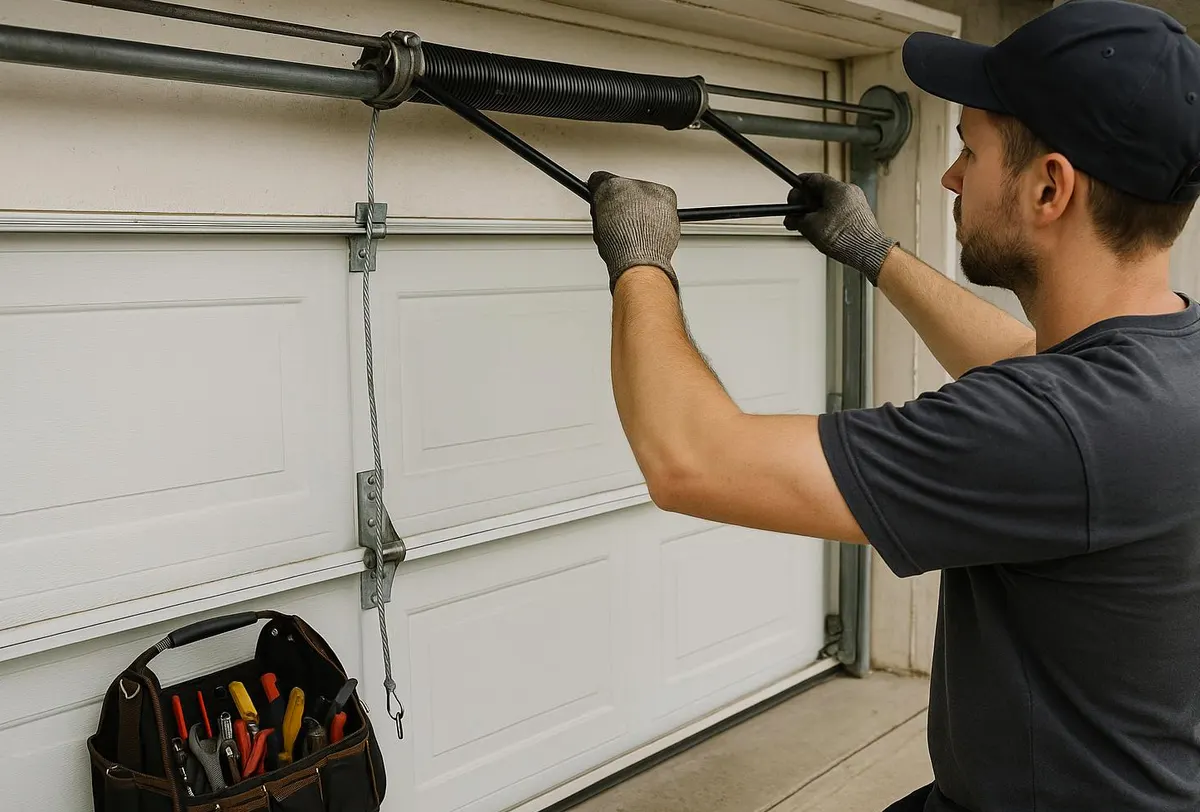
The fix: Spring tension adjustment or full replacement is not a DIY job — the springs hold enough stored force to cause serious injury. A technician measures the door's balance by hand and adjusts or replaces the springs to match the door's weight.
Last: The Opener Itself
If the door still drags after the seal, tracks, and springs check out, the opener's force and limit settings get tested. A motor straining against friction elsewhere in the system can wear down over time, and older units sometimes need their force settings recalibrated as the weather shifts through the seasons.
When to Call New Smyrna Beach Garage Door
If your door sticks every cool morning, drags audibly, or the opener seems to be working overtime, it's worth getting it looked at before a part fails outright. Our Preventive Maintenance visits cover exactly this kind of seasonal check — seals, tracks, rollers, lubrication, and spring balance — so small friction problems get caught before they turn into a dead opener or a snapped cable. If the issue turns out to be spring tension or wear, our Spring Replacement service gets the door back to a safe, smooth balance the same day.
If your garage door in New Smyrna Beach, Edgewater, Port Orange, or anywhere nearby is sticking, dragging, or just not moving the way it used to, give New Smyrna Beach Garage Door a call. We'll come take a look, tell you straight what's going on, and get it moving smoothly again.