
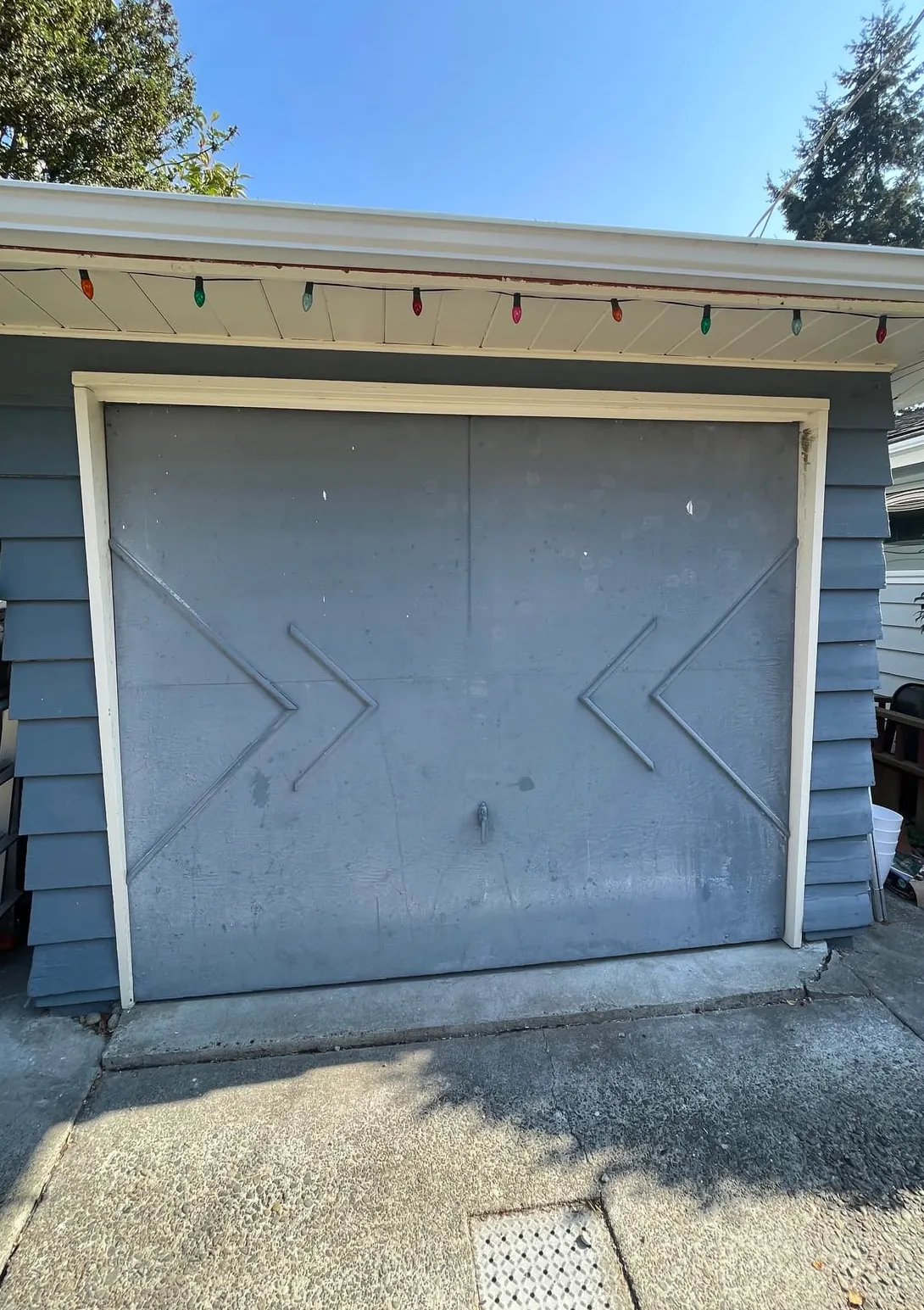
The Dent That Changes Everything
It usually happens fast. A trash can rolls the wrong way in a gust, a bike gets left where it shouldn't, or a branch comes down during one of those afternoon downpours that roll in without much warning. You pull into the driveway, hit the opener, and there it is — a crumpled section of your garage door, maybe a seam that's started to buckle, maybe a track that's bent just enough to make the door shudder on its way up.
Your first thought is probably, can I just replace that one panel? Sometimes yes. Sometimes the smarter move is a new door altogether. The right answer depends on the door's age, how it was built, and what's actually going on behind that dent.
Option 1: Replacing the Single Panel
Most sectional garage doors are built in horizontal panels stacked and bolted together, which in theory makes swapping one section straightforward. A technician removes the damaged panel, orders a matching replacement, and reattaches it to the existing hardware.
- Lower upfront cost. Panel replacement typically runs a fraction of a full door, often in the low hundreds depending on size, material, and insulation.
- Faster turnaround. If the panel is in stock or a common size, the repair can often happen in a single visit.
- Less disruption. You keep your existing opener, springs, and track alignment rather than reworking the whole system.
But panel repair has real limits:
- Color and texture matching can be tough. Sun exposure, salt air, and age fade and weather a door unevenly. A brand-new panel next to five-year-old panels can look like a patch job, even if the construction is flawless.
- Discontinued styles are a problem. If your door is more than eight or ten years old, the manufacturer may have changed panel profiles or stopped making that model. Finding an exact match gets harder every year.
- One dent can mean hidden damage. A hard impact that bends a panel often tweaks the track, hinges, or rollers along with it. If those are out of alignment, a new panel bolted onto a warped frame won't solve the real problem.
Option 2: Replacing the Whole Door
A full replacement swaps everything — panels, tracks, hinges, and usually springs — for a matched, factory-fresh system.
- Uniform appearance. No mismatched color, no visible seam where old meets new.
- Updated wind-load rating. If your current door predates current wind-load expectations for this part of Florida, a new door lets you upgrade to a design rated for higher wind pressures, which matters more here than almost anywhere else in the state during hurricane season.
- Fresh hardware across the board. Springs, rollers, and tracks that have been absorbing humidity and salt air for a decade all get replaced at once, instead of failing one at a time over the next few years.
- Higher cost and more downtime. Full door installs generally run well into four figures depending on size, insulation, and material, and the job takes longer than a panel swap.
The Real Trade-off
It comes down to three questions:
- How old is the door? Under five years old, with the model still available, panel repair is usually the practical choice.
- Is the damage cosmetic or structural? A clean dent with no track distortion is very different from a bent section pulling the hinges out of alignment.
- What shape is everything else in? If the springs are original, the opener is aging, and the panels are already showing rust streaks or swelling from years of coastal humidity, a single new panel is a patch on a door that's heading toward bigger problems anyway.
What Tips the Decision for Homes in This Area
Coastal humidity and salt air speed up wear in ways that aren't always obvious from the driveway. Steel panels can develop rust at the seams and along the bottom edge well before they look old anywhere else. Wood and composite doors swell and shift with moisture, which can make it hard to get a replacement panel to sit flush even if it's the exact right size. And if your current door was installed before stricter wind-load expectations became standard, a storm-driven impact that dents one panel is also a reminder that the rest of the door may not meet today's wind-pressure standards either.
If your door is relatively new, the damage is isolated, and the model is still in production, panel replacement is the sensible, lower-cost repair. If the door is older, already showing corrosion or wear elsewhere, or you've been meaning to upgrade the wind rating before the next storm season, the dent is a good excuse to handle the whole door now instead of patching it twice.
Our Recommendation for Typical Homes Here
For most homes in this area, we lean toward a simple rule: if the door is under five to seven years old and the damage is contained to one panel with no track or hinge distortion, repair it. Past that age, or if you're already seeing rust spots, soft wood, or an opener that's been struggling, put that money toward a new door built for current wind-load standards instead of a panel that'll be the newest-looking part of an otherwise tired system.
When to Call New Smyrna Beach Garage Door
If you're staring at a dented panel and aren't sure which way to go, that's exactly the kind of call we're happy to take. We'll inspect the panel, the tracks, the hinges, and the springs together — not just the obvious dent — and give you a straight answer on whether Garage Door Repair will do the job or whether full Garage Door Installation makes more sense given the door's age and condition. If the damage happened during a storm and you need the door functional again fast, our Emergency Garage Door Service can get you a temporary fix while you decide on the long-term plan.
Whether it's one panel or the whole door, New Smyrna Beach Garage Door is ready to take a look. Call us for honest advice and a quote that fits your home in New Smyrna Beach, FL.