
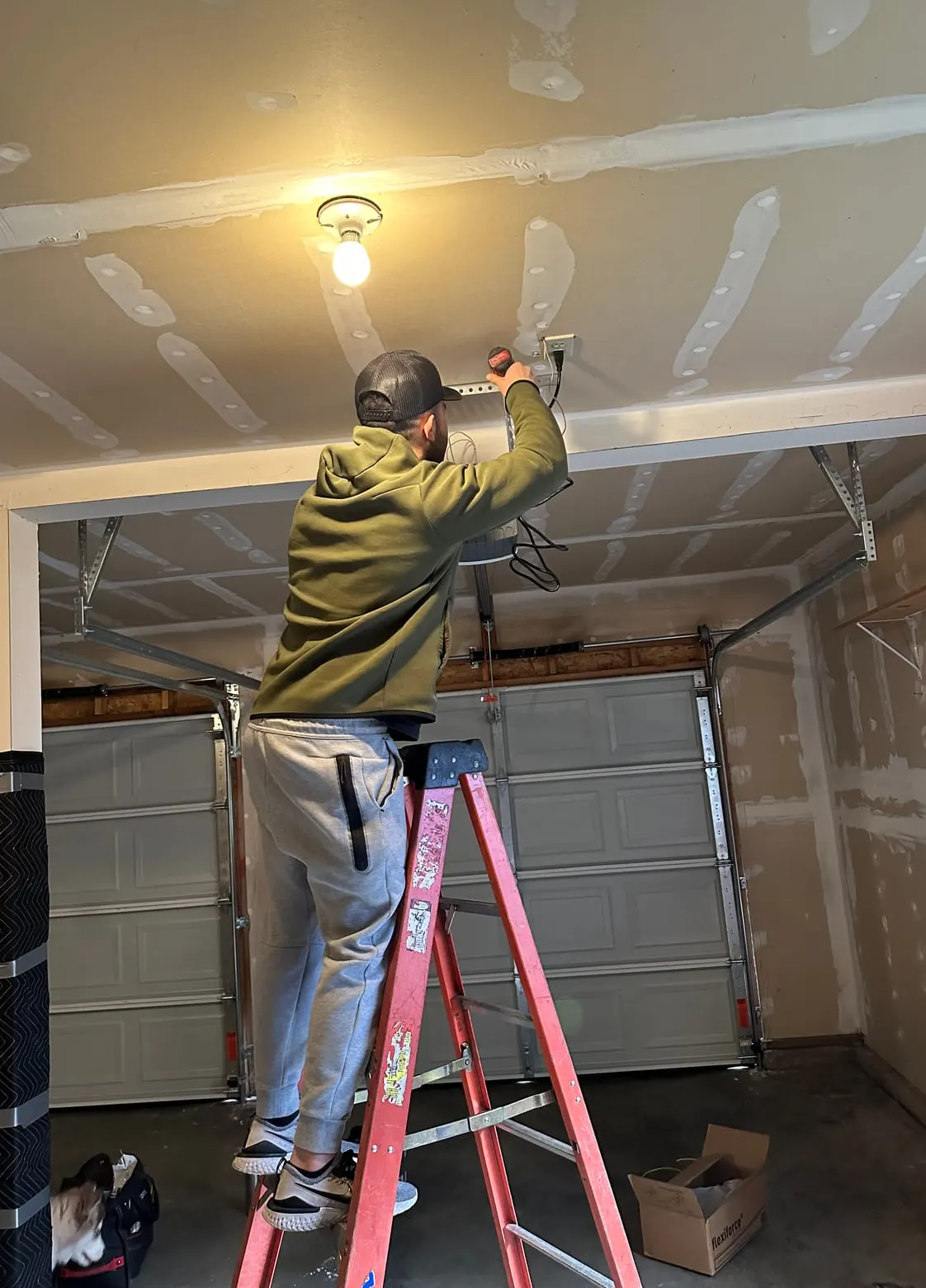
What We Find When We Pull Up to This Call
The call usually sounds the same: "My garage door won't open at all. I've tried the remote, I've tried the button on the wall, nothing happens." Sometimes there's a faint click from the opener. Sometimes there's nothing — no hum, no light, no movement. By the time we get the address, we've already got a short list of likely culprits, because this complaint follows a pattern we see constantly in homes near the coast where humidity, salt air, and summer storm season all take a toll on electronics mounted in a hot garage.
Before any tools come out, we ask a few questions over the phone: Does the opener light turn on at all? Did this happen suddenly or gradually? Has there been a storm, a power flicker, or recent yard work near the garage? The answers usually point us toward one end of the checklist or the other before we even knock on the door.
The Diagnostic Order We Follow
1. Remote Battery and Signal
This is the fastest check and the most common fix, so it's always first. A weak coin-cell battery can get just enough voltage to light the remote's indicator but not enough to send a clean signal. We swap in a fresh battery and test from several distances. If that doesn't work, we check for interference — a nearby Wi-Fi extender, a new LED fixture, or even a vehicle parked directly under the antenna can scramble the signal. The fix here is either a battery swap (a couple of dollars) or relocating the interfering device.
2. Wall Button and Wiring
Next we test the wall-mounted button directly. If the remote fails but the wall button works, we know the opener itself is fine and the problem is isolated to the remote or its signal. If neither works, we check the low-voltage wire running from the button to the opener head. In garages exposed to humidity swings, these thin wires can corrode at the connection points or get nicked during storage projects, shelving installs, or holiday decorating. The fix is usually stripping back the wire and reseating it, or replacing a section of damaged wire — a quick, inexpensive repair.
3. Power Supply to the Opener
If both the remote and the button get zero response — no light, no sound — we check power before touching anything electronic. Garage outlets are frequently on GFCI circuits, and humidity or a minor power surge from afternoon storms can trip them without an obvious sign. We check the outlet, the breaker, and whether the opener's safety plug or surge protector has failed. This fix can be as simple as resetting a GFCI button or replacing a worn outlet.
4. Safety Sensor Alignment
Modern openers won't close the door — and on some models won't respond to commands at all — if the photo-eye safety sensors near the bottom of the tracks are misaligned or blocked. Humidity and condensation can fog the sensor lenses, and settling or minor impacts can knock them out of alignment. We check for a blinking LED on the sensors, which usually indicates misalignment, and realign or clean them. This is a common issue after storm season winds have nudged the tracks or after someone has bumped a sensor while moving lawn equipment or beach gear in and out of the garage.
5. Antenna and Receiver Connection
If sensors and power check out, we look at the opener's antenna, which is often a thin wire hanging from the motor unit. These get brittle over time, especially with heat cycling in an uninsulated garage, and can snap or disconnect. A damaged antenna means the receiver simply isn't catching the remote's signal even though everything else works fine. The fix is reattaching or replacing the antenna wire.
6. Circuit Board or Logic Board Failure
This is where we land when everything above checks out clean. Circuit boards are vulnerable to power surges from storms, and salt-laden coastal air speeds up corrosion on solder points and connectors over the years. Telltale signs include a burnt smell, visible corrosion, or an opener that intermittently works before failing completely. The fix here is usually a full logic board replacement or, if the opener is older, replacing the entire unit rather than chasing parts for a board that's already showing its age.
7. Lost Programming
Occasionally, after a power outage or a battery disconnect, an opener's memory gets wiped and the remote simply needs to be re-paired using the learn button on the motor unit. This is quick to check and quick to fix, but it's placed near the end of the list because it only applies when the opener itself is clearly receiving power and functioning — it won't explain a completely dead unit.
Why This Order Matters
Working through these steps in sequence saves time and money. Jumping straight to "replace the opener" when the real issue is a corroded wall-button wire means paying for a part that was never broken. Checking power and sensors before assuming a board failure avoids unnecessary board replacements. The order also reflects how often each cause actually occurs in local garages — dead batteries and misaligned sensors are everyday nuisances, while storm-damaged circuit boards are less common but more serious.
When to Call New Smyrna Beach Garage Door
If you've swapped the remote battery and tested the wall button with no luck, it's time to call in a technician rather than start guessing at wiring or opening the motor housing yourself. Our Garage Door Opener Repair & Installation service covers everything from sensor realignment to full logic board replacement, and if your opener is older or has been through one too many power surges, we can talk through options for a reliable replacement. For sudden, complete failures that leave your door stuck closed, our Emergency Garage Door Service gets a technician out quickly so you're not locked out of your own garage.
If your opener has stopped responding, give New Smyrna Beach Garage Door a call. We serve homes and businesses throughout New Smyrna Beach, FL and the surrounding area, and we'll get your door working the right way, the first time.